01 : Overview
MATCH READOUT · 4 PLAYER ARENAP1P2P3P4PVE
PRESSUREHighest round total wins the match.
PRESSUREHighest round total wins the match.
02 : Design Pillars
North starBuild a competitive arena game where a player can immediately read the situation, make a fast choice, and understand why they won or lost.Select a pillar to view its player promise and design test.
03 : Core Gameplay Loop
Every combat round repeats this decision loop: read the arena, survive the pressure, commit to an attack, then live with the result.
Reference 01 · 00:29TowerFall Ascension · 4-Player PvP
Compact arenas and constant movement create immediate pressure, escape, and target-selection choices.
Reference 02Slay.one · GameplayFast top-down browser combat shows how readable weapons and player overlap shape every encounter.
Reference 03 · 00:44Super Smash Bros. Ultimate · 4-Player Match4-player matches demonstrate combat hierarchy, sharp feedback, and fast competitive pacing.
04 : Systems & Mechanics
Live assembly previewTip · EntityEntity SystemMovement, hits, hurt states, knockback, squash and stretch, state machines, and held items. MatchMatch SystemOwns the map, timer, kills, wins, and result of one match. RoomRoom SystemHosts the match series, final winner, summary, settings reset, and next roster. Foundation · NetworkMultiplayer APISearches, creates, and joins rooms; sends player data; and synchronizes the shared game environment.
Looping7s loop
scene_changer and screen_shaker plug into this architecture without replacing its ownership boundaries.05 : World & Content
The combat map is a compact top-down world built on a 16x16 tile set; its geometry must create pressure without compromising readability.
Note: Any ideas or adjustments can and will be discussed in the future.
Top-down tilemap
16x16 tile set
The shared grid for combat-map construction.
Floor tiles
Clean
Baseline floor state.
Lightly damaged
Small wear variation.
Aged
Older, more weathered variation.
Wall tiles
Autotiled roof
Mostly black to keep the arena quiet.
Readability shadows
Edge-only shadow autotile
Adds shallow depth cues at boundaries without darkening the play space.
WIP
Traps & enemies
Traps
Static spikes
Permanent danger in the combat space.
Timed spikes
Cycle on and off by timing.
Triggered spikes
Activate through player interaction.
Levers
Manual activation point.
Pressure plates
Activation from contact.
Flame thrower
Short-range flame hazard.
Room center
Placed in the middle of the room.
Wall-mounted
Attached to a wall.
Arrow dispenser
Long-range arrow hazard.
Room center
Placed in the middle of the room.
Wall-mounted
Attached to a wall.
Enemies
Small slimes
Pressure player movement.
Big slimes
On death
Three small slimes
Spawn from the defeated big slime.
Ranged bats
Bullets
Attack players from a distance.
Future enemy types
Reserved for later discussion.
Initial loadout
Player weapons
Sword
Spear
Bow
Magic wand
Nunchaku
WIP
06 : Art & Audio Direction
Art direction references
These references establish the visual language: dark pixel-art arenas, deliberate contrast, and sparse detail that keeps threats and player actions readable in motion.
Art direction references
Showing 1 of 3
Color palette
Endesga 64 is the 64-color pixel-art palette by ENDESGA used as the project’s visual reference. View it on Lospec.
World#131313 · #272727
Quiet geometry and surfaces behind the action.
Player#0098DC
Safe state, selection, and player-owned information.
Threat#EA323C
Damage, hostile intent, and immediate danger.
Reward#FFA214
Objectives, pickups, and confirmed progress.
Text#B4B4B4 · #F9E6CF
Neutral reading text, with warm highlights kept scarce.
Audio direction references
Each cue below plays from the supplied library. Numbered takes share one control and rotate on every request, so repeated actions can be evaluated without duplicate buttons.
Clear, compact feedback
Use dry, purposeful cues with a strong transient and a readable role in a crowded fight.
Quarantine Zero
Forgotten Era
Kraken's Last Fight
Generic game-language
Avoid bright novelty bleeps, broad trailer whooshes, cartoon explosions, and overly celebratory feedback.
Avoid
07 : UI / UX Direction
The main menu should take its visual direction from the following style.
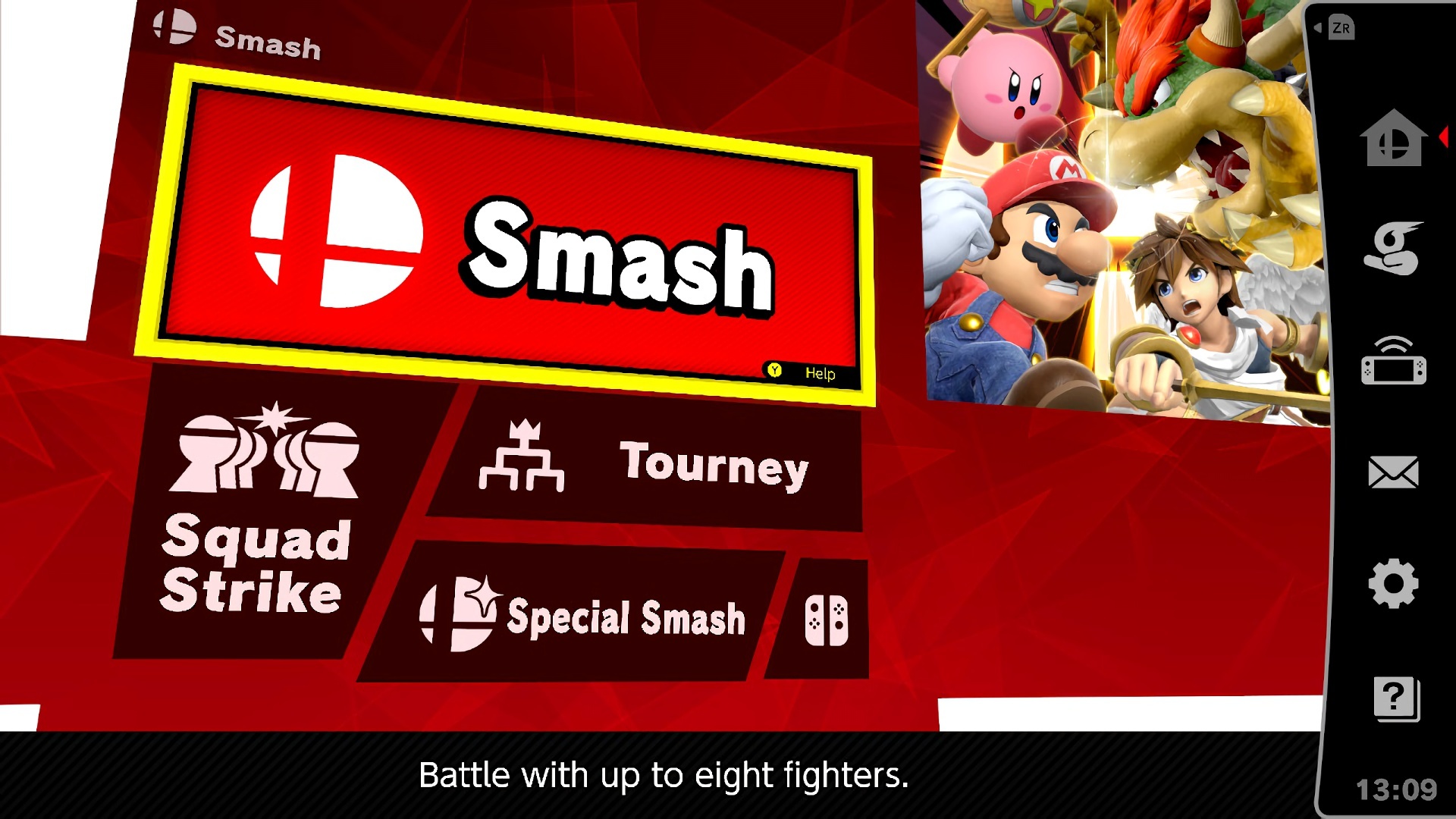 UI study referenceSuper Smash Bros. UltimateOpen the Game UI Database entry for full-screen study.Open reference ↗
SHAPEAngular panels and directional dividers create momentum.
HIERARCHYPlayer identity, weapon state, round score, objective, and timer dominate.
CONTRASTDark plates, hard outlines, and saturated state accents. No gloss or glow.
MOTIONBrief diagonal or scale feedback only when state changes.
UI sketch
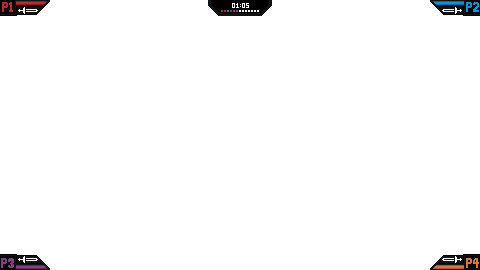
Room setup needs one visible host panel, player slots, match rules, readiness state, and a single clear start action.